Why the EUDI wallet matters
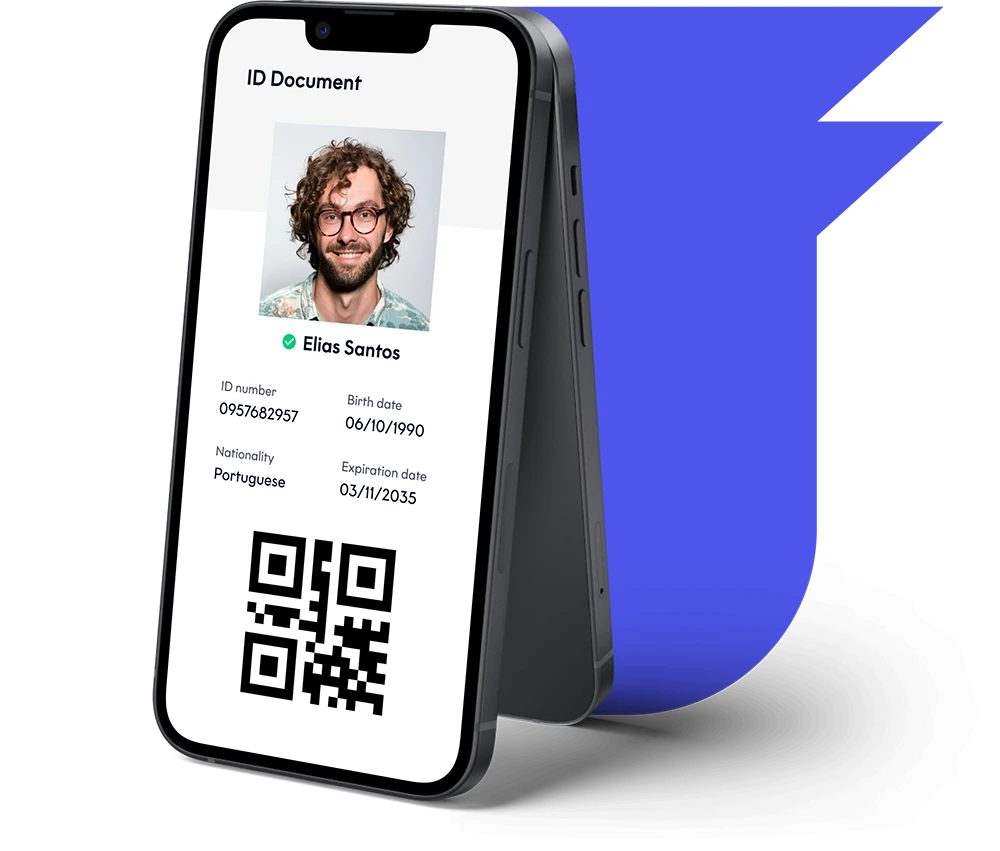
From 2027, every EU citizen, resident and business will be able to access to an EU digital identity – a government-issued digital wallet containing their verified identity data, name, nationality, date of birth, cryptographically signed and tamper-proof.
When a customer presents their EUDI Wallet, sometimes called a digital ID wallet or EU identity wallet, you're not checking a photograph of a document. You're receiving identity data confirmed directly by a government source, at the highest assurance level eIDAS defines. That's a fundamentally different, and more reliable signal than most onboarding flows rely on today.
The regulation behind the wallet
eIDAS 2.0, formally known as the European Digital Identity framework, created the European digital identity wallet and standardised digital identity across all 27 member states. It defines three levels of identity assurance: Low, Substantial, and High. AMLR requires High assurance for customer onboarding in regulated sectors.
That distinction matters. eIDAS High means identity data has been verified directly against a government-authoritative source and cryptographically signed – not scanned, not self-declared. It carries the same legal weight as a passport presented in person.
eIDAS 2.0 also mandates privacy by design. When a customer presents their EUDI Wallet, they share only what the transaction requires. Verifying someone’s age doesn’t expose their address. Confirming nationality doesn’t reveal their full identity record. The customer stays in control of their data – and you receive only what’s needed for compliance.
Where the wallet fits, and where it stops
The wallet tells you who your customer is. AMLR requires you to do everything else.
← WALLET STOPS HERE →
Sanctions lists
PEP
Adverse media
What each step actually means

" width="45px"><path d="M 0 0 L 45 0 L 45 45 L 0 45 Z" fill="transparent" height="45px" id="CCZPAyDf5" width="45px"/><path d="M 0 18.984 C 0 8.5 8.5 0 18.984 0 C 29.469 0 37.969 8.5 37.969 18.984 C 37.969 29.469 29.469 37.969 18.984 37.969 C 8.5 37.969 0 29.469 0 18.984 Z" fill="rgb(0, 204, 122)" height="37.96875px" id="L2Q21evpr" transform="translate(3.516 3.516)" width="37.96875px"/><path d="M 0 2.983 L 2.983 0 L 11.932 8.949 L 8.949 11.933 Z" fill="rgb(255, 255, 255)" height="11.932734374998866px" id="Rk_5PgmlI" transform="translate(9.844 20.391)" width="11.932031250000819px"/><path d="M 19.797 2.983 L 16.814 0 L 0 16.814 L 2.983 19.797 Z" fill="rgb(255, 255, 255)" height="19.79718749999909px" id="xdpOxNp1V" transform="translate(15.971 12.656)" width="19.797187499999836px"/></g></svg>)
Important to note: Steps 2, 3, and 4 aren't optional additions. They're the compliance obligation the wallet enables you to start but can't finish alone.
What about customers not using a wallet yet?
Wallet adoption will be gradual and uneven across EU markets. Many of your customers won't have a wallet on day one and AMLR can't compel them to get one. We've got two other compliant paths ready.
Why one flow matters more than three good tools
You can have a wallet integration, an AML tool, and a liveness provider all best-in-class and still have a compliance gap. The gap isn't in the tools. It's between them.
A compliance record showing identity verified at 09:42 and AML screening completed at 11:17 isn't a clean record. AMLR expects these checks to form a single, unbroken onboarding event. That only happens when they run in one flow.
Trusted by Europe's most regulated businesses
Ralph Post | Chief Technology Officer, Fourthline